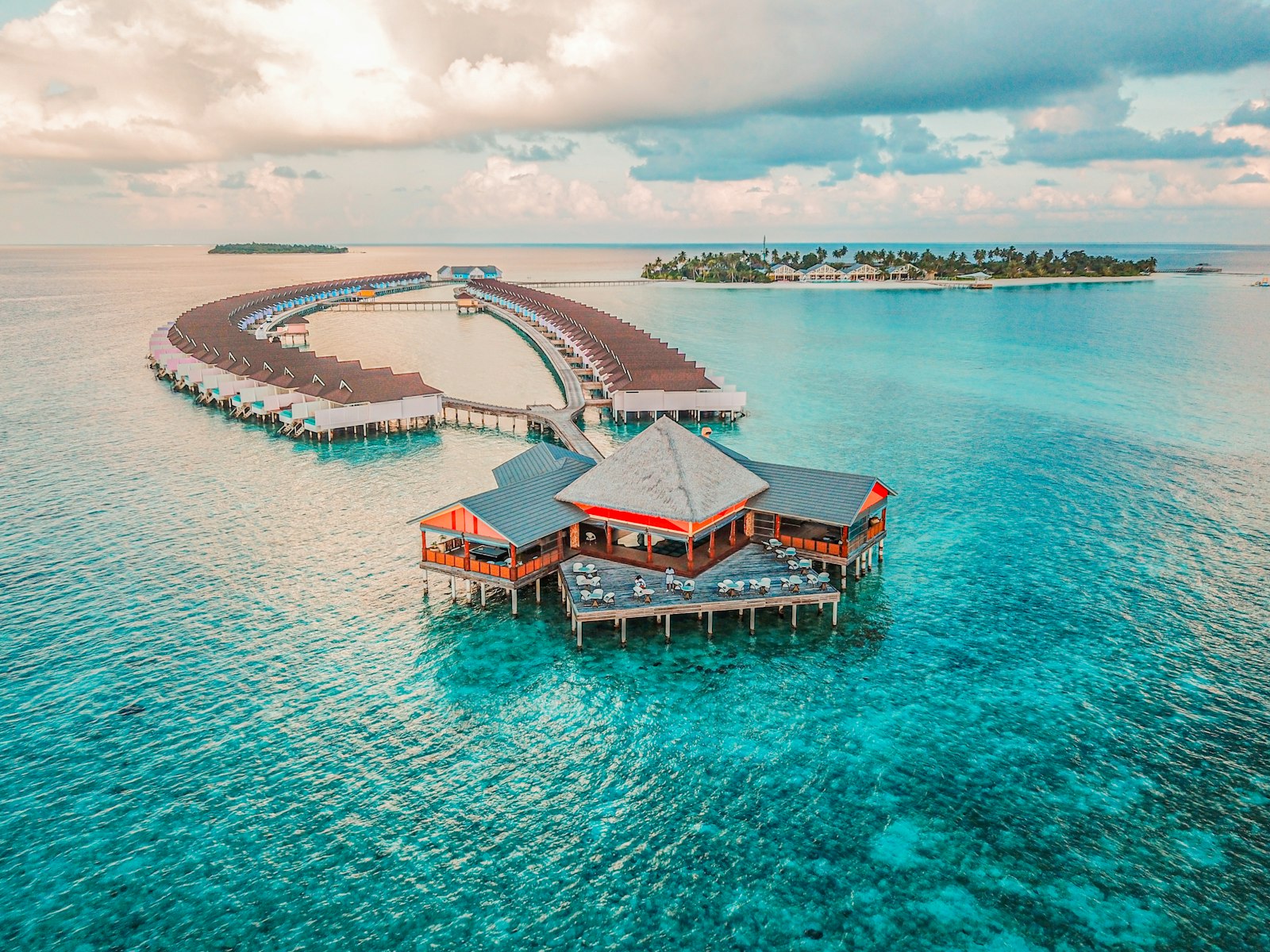
Concept
The Reef Pavilion began as a commission from the Addu Atoll Council for a structure that could serve simultaneously as a marine research station, a public gathering space, and a beacon visible from the sea. The three functions seemed contradictory — one demands seclusion, one demands openness, one demands visibility.
The resolution was sectional rather than plan-based. The building steps with the topography of the beach, sinking partially below grade on the landward side where the research laboratory occupies a controlled, conditioned environment. At grade, a covered public terrace wraps the building. Above, an open observation deck rises to eight metres — a lantern at night, a watchtower by day.
Process
The structural system employs a central concrete core surrounded by a perforated steel exoskeleton. The perforation pattern was derived computationally from the branching geometry of the Acropora coral species found at the adjacent reef. Perforations vary in density across elevations to modulate solar gain and provide privacy at the laboratory level while opening fully to the view at the upper terrace.
Local rammed earth was used for interior partition walls, sourced and processed on Addu island itself. The material choice reduced embodied carbon in transportation and provided a thermal mass appropriate to the climate.
Result
The pavilion has become a landmark for both the local community and visiting researchers from the Maldives Marine Research Institute. The public terrace hosts community gatherings; the laboratory has facilitated three ongoing coral restoration research programs.
Technical Data
| Specification | Detail |
|---|---|
| Site Area | 2,400 m² |
| Built Area | 380 m² |
| Structure | Concrete core, perforated steel exoskeleton |
| Envelope | Rammed earth, coral stone, bamboo composite panels |
| Completion | September 2022 |
| Client | Addu Atoll Council |